
Case study
Sundae Skate
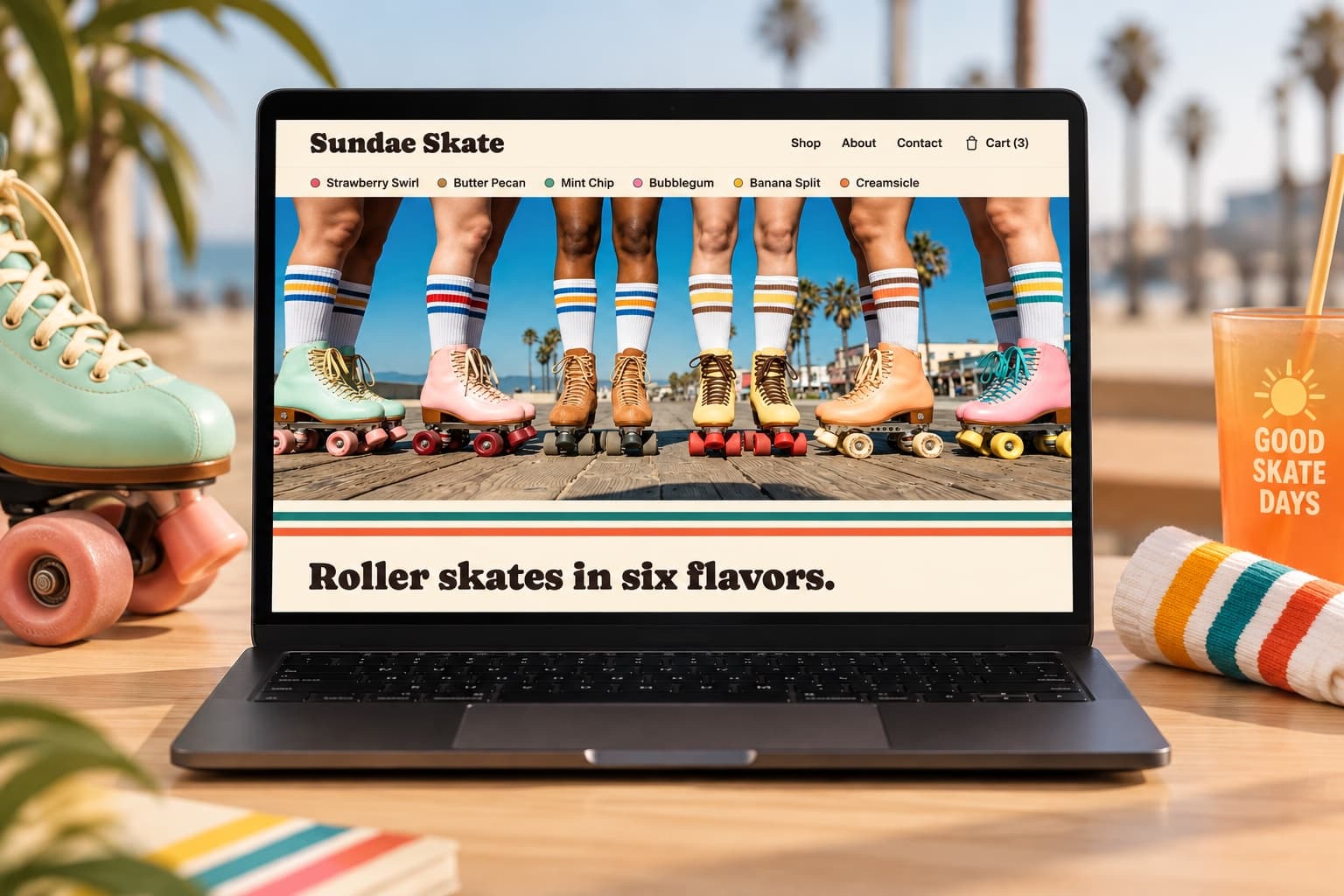
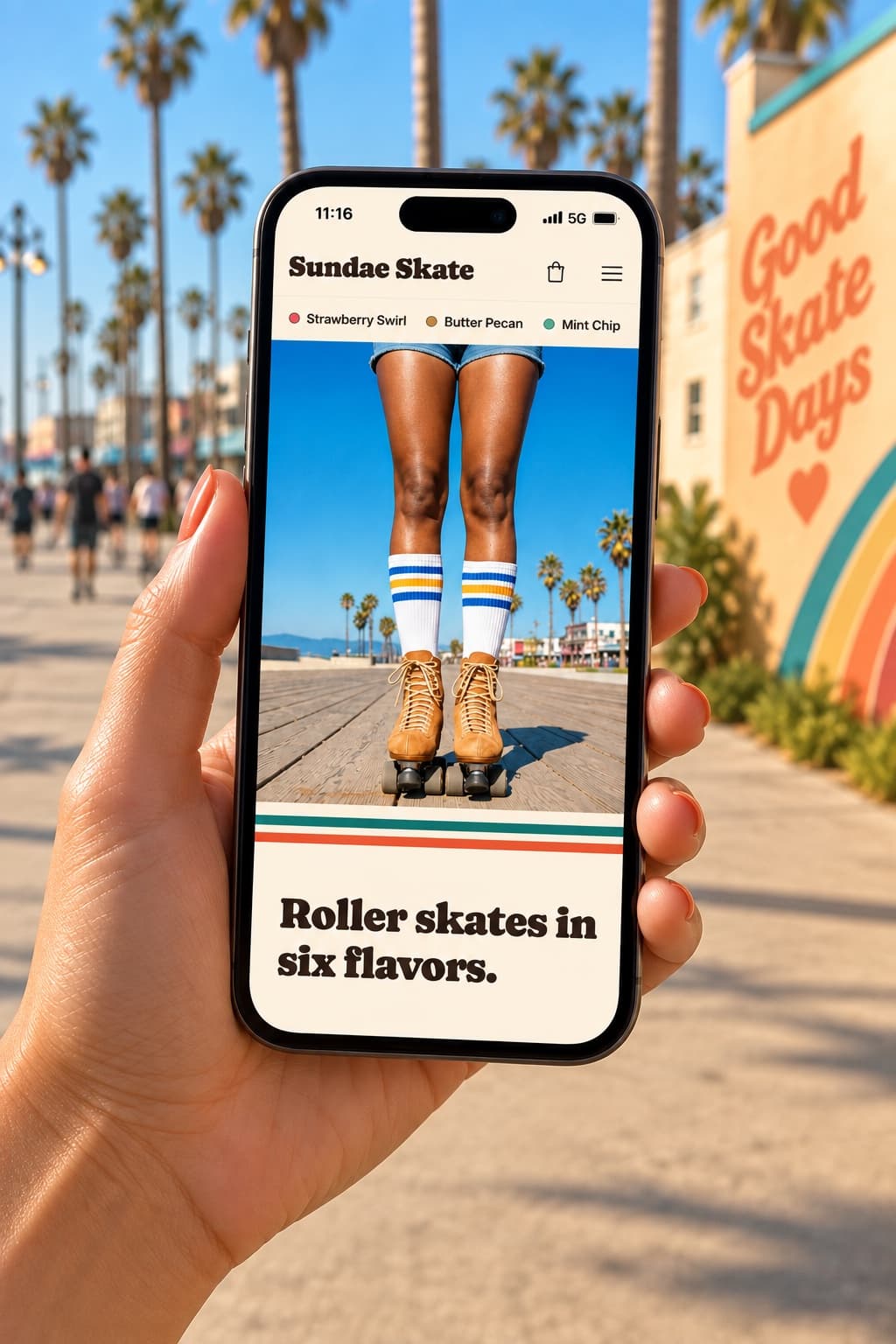
Sundae Skate is a roller skate shop three blocks off the Venice boardwalk. One skate, six flavors, and everything to match. I created the brand, the story, the palette and the type, then built the storefront as a headless Next.js site connected to a real Shopify back end, so the shop owner manages the products and the site keeps itself current.
- Role
- Brand identity, web design, build
- Year
- 2026
- Tools
- Ship Studio, Shopify, Adobe Firefly
The idea
It started with a girl on roller skates.
I had been watching The Shards, the series from Ryan Murphy based in the eighties, and one of its characters, Really Rhonda, is never off her roller skates. She and the world of that show are where this started. A skate shop was the obvious home for it. Sundae came from spelling it with an e, which turned the store into an ice cream parlor: six colorways became six flavors, so you shop for Strawberry Swirl or Mint Chip rather than for pink or green. That one letter built the brand. It set the name, the palette, the product naming and the way the entire site is navigated.
The system
Two ways to shop, one set of rules.
You can browse by flavor and see everything in that colorway together, or browse by type and see every flavor of one product. Both routes run on the same design system: one type scale, one card treatment with a hard offset shadow in that flavor's own accent color, and a grid that never changes shape between them.
The story
A shop that sounds like a person.
Most small stores feel like people and most small store websites do not. So the About page is a story rather than a summary: a first secondhand pair, skating that was never exercise, the friends who came from it, and one of them getting married in a pair of skates. The photographs sit in overlapping collages rather than a tidy grid, because that is how you would actually show someone your pictures.
The build
Headless, so the owner never needs me.
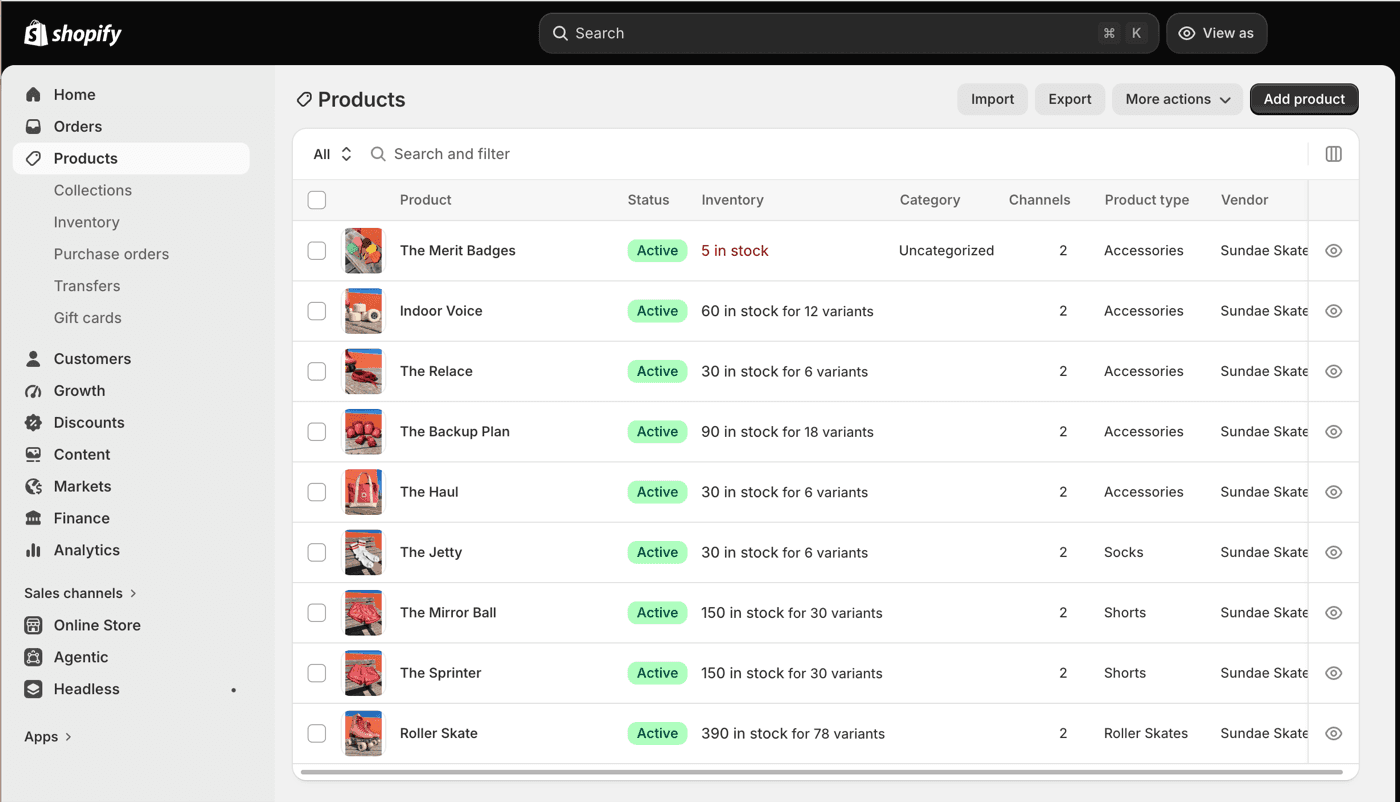
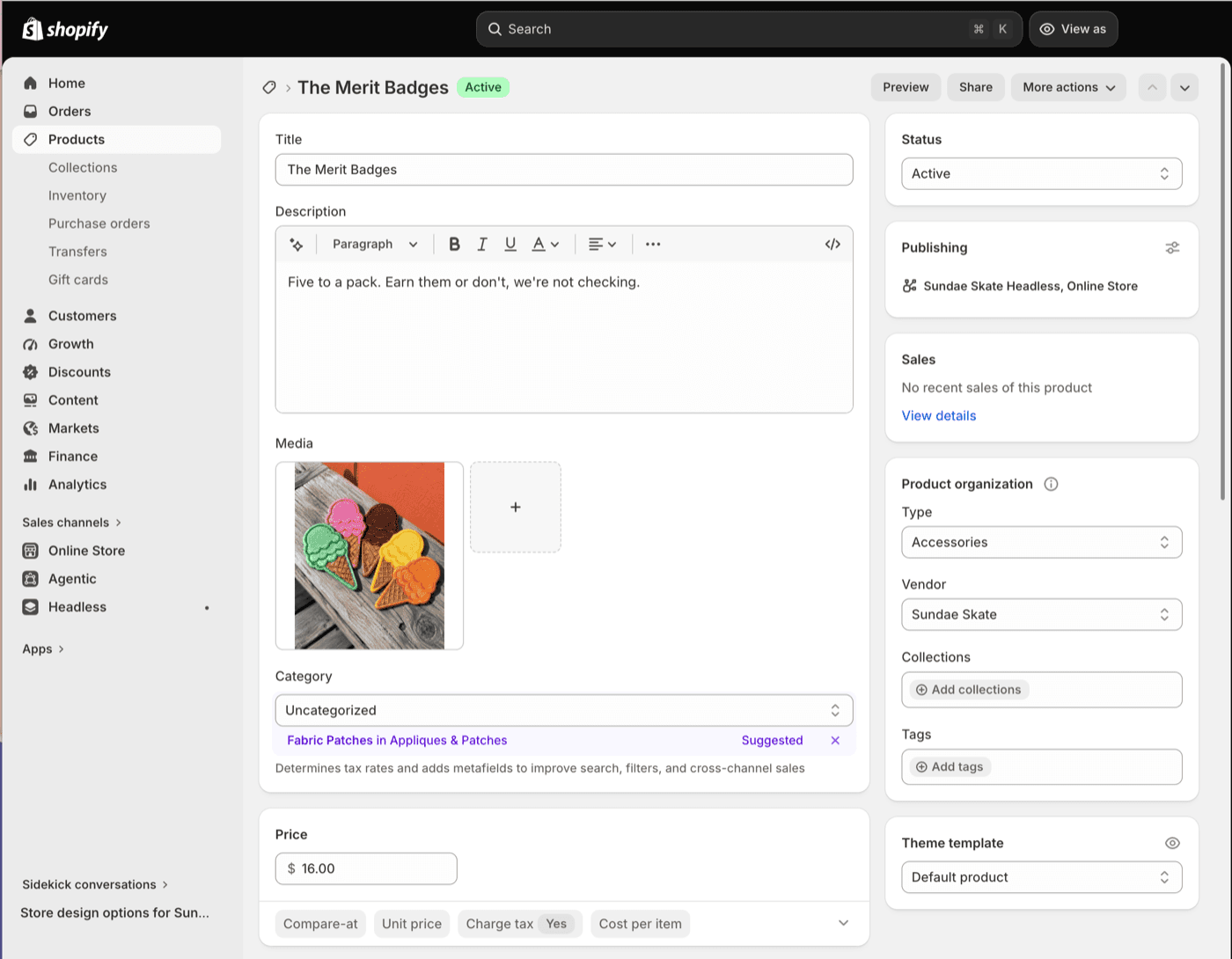
The storefront is Next.js on Vercel pulling products from Shopify. The owner adds a product, changes a price, or updates stock in Shopify, and the live site reflects it without a developer touching anything. That is the point of building headless: the design is mine, but running the shop belongs to the person who owns it.
Note
The Shopify back end. Products, variants and stock live here, and the site reads from it.
Note
The concept, the name, the brand, the palette, the type, the product naming, the photography direction and every word on the site are mine. Ship Studio wrote code to my direction. A tool can build what you describe. It cannot tell you that Sundae should have an e on it.
The numbers
Fifteen megabytes down to under one.
The first build sent 15.4MB of images to phones and took 55.7 seconds to paint its largest element on a throttled connection. Converting the photography to modern formats and routing every image through proper handling brought that to a 3.6 second paint, and made the site usable away from wifi.
- 100
- Performance, desktop
- 100
- Accessibility
- 100
- Best Practices
- 100
- SEO
Note
Google PageSpeed Insights, September 2026. Desktop scores 100 across all four categories. Mobile scores 95 for performance, 96 for accessibility, and 100 for best practices and SEO.